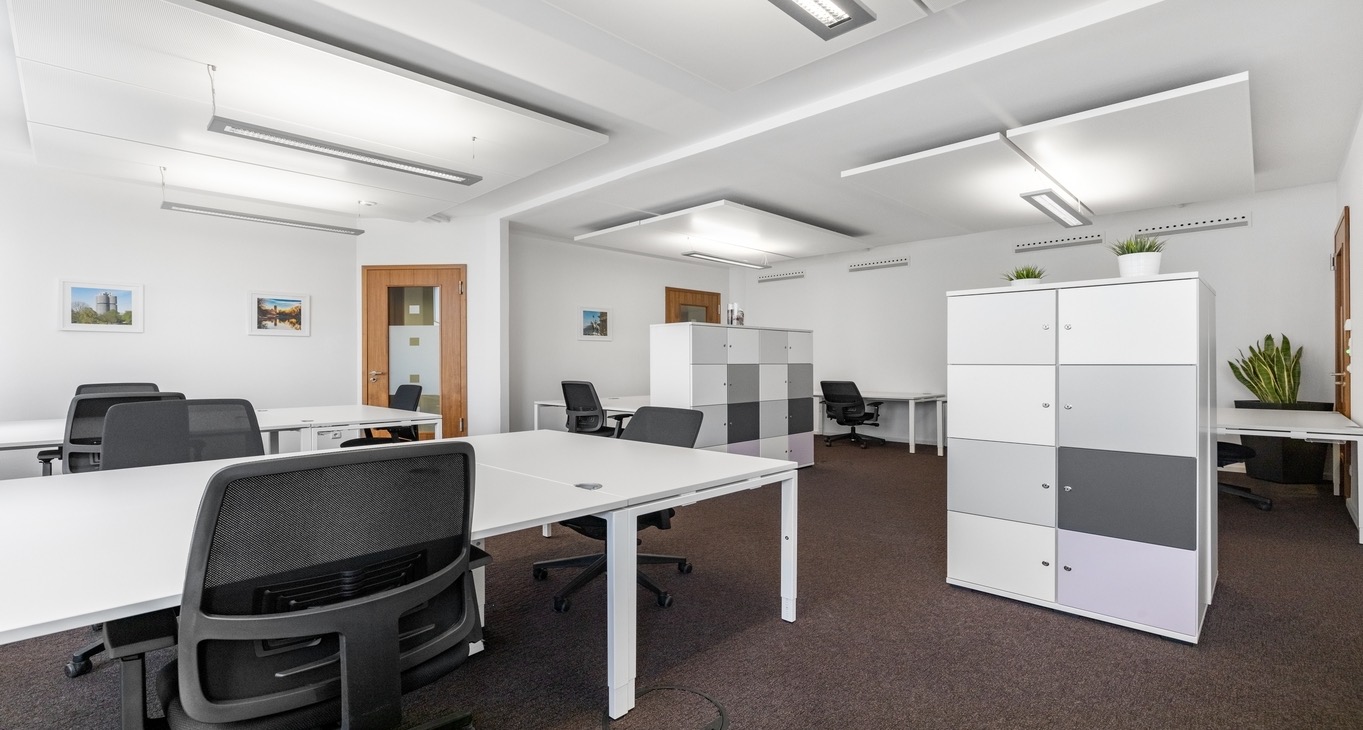
Классический вопрос планирования — его задают каждый день и чаще всего отвечают на него неверно. Реалистичная норма для Мюнхена: 8–12 м² на рабочее место в пересчёте на всю площадь офиса, включая переговорные, кухню и коридоры.
Быстрый расчёт по размеру команды
5 человек ≈ 45–60 м² · 10 человек ≈ 90–120 м² · 20 человек ≈ 180–240 м² · 50 человек ≈ 450–600 м². Open space укладывается в нижнюю границу, кабинетная планировка — в верхнюю; если вы регулярно принимаете клиентов, добавьте ещё ~10%.
Во сколько это обходится в Мюнхене?
При нынешней медиане около 34 €/м² в месяц по нашим объявлениям офис на десять человек площадью 100 м² обойдётся примерно в 3400 € в месяц плюс эксплуатационные расходы — заметно дешевле в Neuhausen, Sendling, Ramersdorf-Perlach и дороже в Altstadt-Lehel, Maxvorstadt.
Не забудьте запас на рост
План найма в 20% в год означает, что «правильная» сегодня площадь через восемнадцать месяцев окажется неправильной. Либо закладывайте запас сразу, либо выбирайте здание с возможностью расширения — оба фильтра работают в поиске по Мюнхену на RentOfficeToday.
What the German workplace rules require
German workplace regulation ASR A1.2 sets a minimum of 8 m² for a room with one workstation and a further 6 m² for each additional one — net area, excluding circulation. For realistic planning, budget 8–10 m² per person across the whole office, including kitchen, meeting rooms and corridors.
How layout changes the number
Open plan sits at the bottom of the range, cellular offices at the top. Teams with heavy video-call use need phone booths on top: one booth per six to eight desks is a proven ratio. Hybrid teams with desk sharing manage on 0.6–0.8 desks per head, which saves noticeable floor area.
Worked example for a team of twelve
Twelve people, classic layout: 12 × 9 m² ≈ 110 m². Add a meeting room for six (about 15 m²) and a kitchen (10 m²) — roughly 135 m². At a median base rent of €34/m² that is near €4600 a month plus service charges.
Plan the growth buffer
If you expect 20% headcount growth a year, take 15–20% more space than you need today or choose a building with an expansion option. Both are filterable in the Munich search: across 65 buildings with 526 units there are often two adjacent spaces in the same building — the cheapest way to grow later.